




Occupational Therapy at Kansas City Psychology: OT Services for Children, Teens, and Adults
By Cassandra Winter, OTR/L
Beginning in mid-October 2026, Kansas City Psychology will expand its services to include occupational therapy (OT) in the Kansas City area. Our occupational therapy services will support children, adolescents, adults, and families experiencing challenges with sensory processing, executive functioning, emotional regulation, fine motor skills, daily living skills, school participation, and everyday routines.
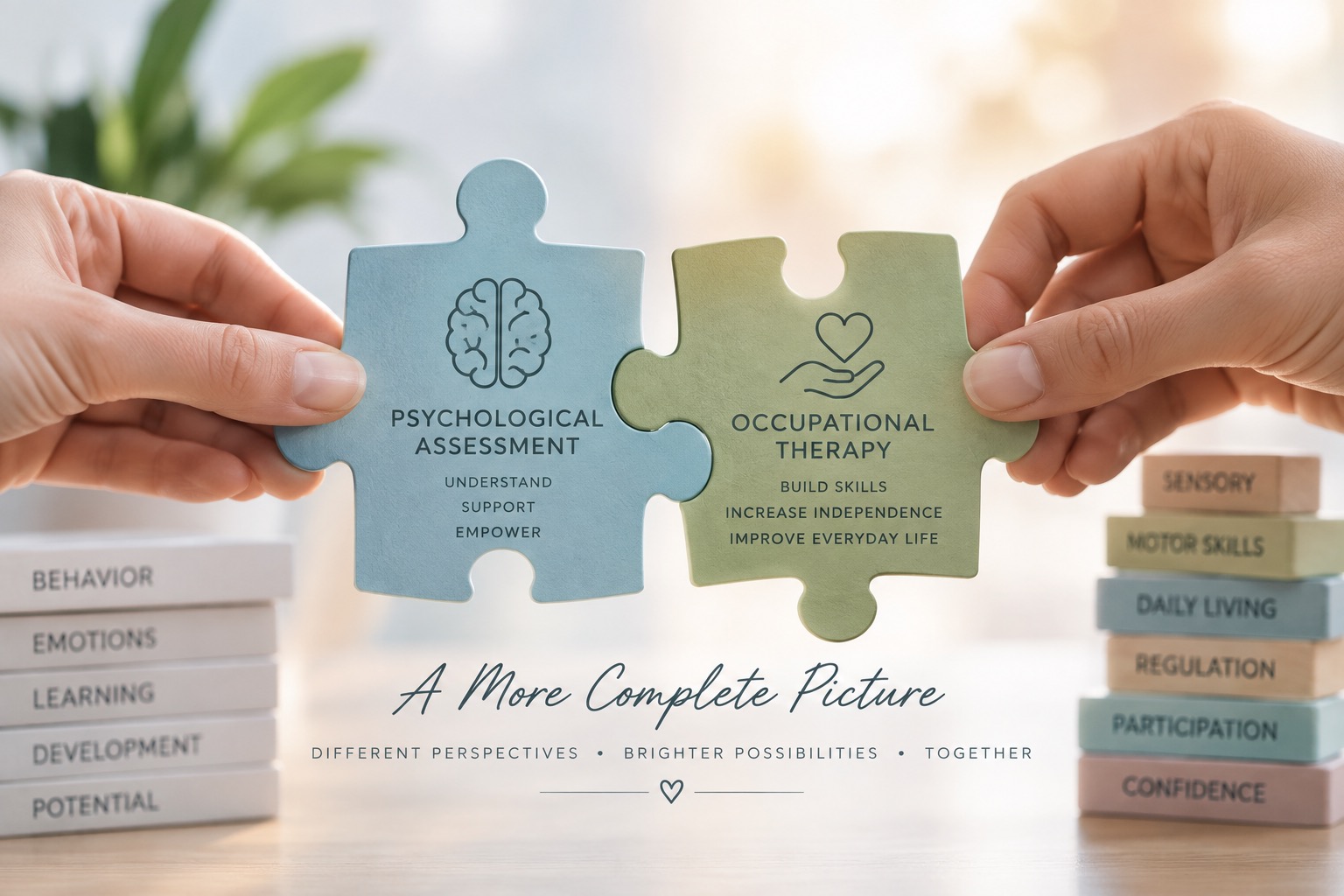
Adding occupational therapy to Kansas City Psychology reflects our commitment to providing collaborative, whole-person care. By offering occupational therapy alongside psychological assessment and mental health services, our team can better understand how emotional, behavioral, developmental, sensory, cognitive, and environmental factors affect a person’s ability to function successfully in everyday life.
Occupational therapy offers a unique perspective by examining how an individual’s abilities, environment, relationships, routines, sensory needs, and daily demands interact. The goal is to identify practical strategies and supports that make meaningful participation in everyday activities more accessible.
Whether the goal is helping a child participate more comfortably at school, supporting an adolescent with executive functioning, helping an adult with ADHD develop sustainable routines, or assisting a family with sensory and daily living challenges, occupational therapy focuses on improving participation in the activities that matter most.
What Is Occupational Therapy?
In occupational therapy, “occupations” are the meaningful activities that fill our days and give our lives structure, purpose, and identity. The American Occupational Therapy Association describes occupational therapy as the therapeutic use of everyday activities to support health, well-being, and participation in daily life.
For children, teens, and adults, these activities may include getting dressed, eating, bathing, sleeping, attending school, completing schoolwork, working, playing, establishing daily routines, building relationships, and participating in family and community life.
An occupational therapist considers not only a person’s individual skills but also the environments, routines, expectations, sensory experiences, and supports that influence successful participation. OT is therefore not simply about teaching someone how to complete a task. It involves understanding why an activity is difficult, what matters to the individual, and what practical changes may make everyday life more manageable.
What Can Occupational Therapy Help With?
Occupational therapy services at Kansas City Psychology may address a variety of functional concerns, including:
Sensory Processing and Sensory Regulation: Occupational therapy can help identify how sounds, textures, movement, touch, visual input, and other sensory experiences affect attention, comfort, behavior, and participation. Sensory support may be particularly helpful for individuals who become easily overwhelmed or who seek or avoid particular sensory experiences.
Executive Functioning: OT can support planning, organization, task initiation, attention, time management, cognitive flexibility, transitions, and completion of multi-step activities. These skills can be particularly important for children, adolescents, and adults with ADHD, autism, or other executive functioning difficulties.
Emotional and Self-Regulation: Occupational therapists can help individuals recognize body signals, understand their regulation needs, and develop practical strategies for managing overwhelming situations and everyday demands.
Activities of Daily Living: OT can promote greater independence with dressing, hygiene, eating, sleep routines, household responsibilities, and other everyday self-care activities.
Fine Motor and Handwriting Skills: Occupational therapy may address coordination, handwriting, utensil use, motor planning, and other tasks requiring fine motor control and precision.
School Participation: Pediatric occupational therapy can help identify strategies, environmental modifications, and supports that allow children to participate more successfully in classroom routines, schoolwork, transitions, and other educational activities.
Work and Adult Responsibilities: OT is not only for children. Occupational therapy for adults can support organization, productivity, routines, sensory needs, executive functioning, and sustainable participation in work, home, and community life.
Self-Advocacy: OT can help children, adolescents, and adults better understand their individual needs, communicate preferences, and identify accommodations and supports that work for them.
Occupational Therapy for ADHD, Autism, and Neurodivergent Individuals
Occupational therapy can be especially valuable for individuals with ADHD, Autism Spectrum Disorder, executive functioning difficulties, sensory processing differences, and other neurodevelopmental needs.
A diagnosis can help explain why certain challenges occur, but understanding how those challenges affect everyday functioning is equally important. An individual may understand what they need to do but struggle with initiating tasks, transitioning between activities, tolerating sensory input, organizing materials, maintaining routines, or regulating their energy and attention.
OT focuses on translating that understanding into practical strategies for daily life.
At Kansas City Psychology, the availability of both psychological evaluations and occupational therapy servicescreates opportunities for collaboration when appropriate. Psychological assessment can help clarify cognitive, emotional, behavioral, developmental, and diagnostic factors, while occupational therapy can focus more directly on how those factors affect participation and functioning in everyday environments.
Why Regulation Matters in Everyday Life
One foundational principle of occupational therapy is that our ability to participate is influenced by how our brains and bodies experience the world.
When someone feels overwhelmed, stressed, exhausted, disconnected, or unable to understand what is happening around them, their available capacity for communication, problem-solving, attention, flexibility, and learning may decrease. This is why supportive relationships and environments can be important.
Research from Harvard University’s Center on the Developing Child emphasizes the importance of safe, stable environments and responsive relationships in healthy development. Prolonged or excessive stress can interfere with systems involved in learning, behavior, and health.
This does not mean someone must be perfectly calm before learning or participating. Rather, when a person is significantly dysregulated, they may have less capacity to access skills they already possess.
Occupational therapy can help individuals and families identify supports for regulation and participation. Depending on the individual’s needs, this may include changes to routines, environmental modifications, movement opportunities, sensory supports, task adaptations, or strategies for recognizing needs before they become overwhelming.
How Occupational Therapy Can Complement Psychological and Other Therapy Services
Challenges rarely occur in isolated categories. Communication, emotional well-being, sensory processing, executive functioning, motor skills, mental health, and daily routines can all influence one another.
For example, a child with communication difficulties may also become overwhelmed during transitions. An adolescent experiencing anxiety may have difficulty organizing schoolwork or managing daily demands. An adult with ADHD may struggle with routines, organization, time management, or sensory overload. An autistic individual may experience sensory differences that affect school, work, relationships, or activities of daily living.
This is where an integrated approach to occupational therapy and psychological services can be especially valuable.
Occupational therapists can collaborate with psychologists, counselors, speech-language pathologists, educators, physicians, and other professionals. At Kansas City Psychology, this interdisciplinary perspective allows our providers to consider how psychological, developmental, sensory, environmental, and functional needs interact in everyday life.
Supporting the Whole Person and the Whole Family
Families provide essential insight into a person’s strengths, preferences, communication, routines, sensory needs, and daily experiences. Occupational therapy works collaboratively with families to develop strategies that fit naturally into everyday life rather than simply adding another list of tasks to complete.
Meaningful progress does not occur only during an occupational therapy session. Strategies are most valuable when they can be applied to the moments that matter: getting ready in the morning, participating at school, completing work, navigating family routines, connecting with others, sleeping, managing responsibilities, or participating in enjoyable activities.
For children, supporting the adult-child relationship can also be an important component of OT. When caregivers better understand what a child may be communicating through behavior, recognize when demands exceed the child’s available capacity, and identify appropriate environmental or sensory supports, everyday interactions can become more collaborative.
Occupational Therapy at Kansas City Psychology
Occupational therapy is about more than completing tasks. It is about helping people understand their needs, access their abilities, develop greater independence, build confidence, and participate more fully in everyday life.
At Kansas City Psychology, our occupational therapy services are designed to support children, adolescents, adults, and families in the Kansas City area. Our collaborative practice brings occupational therapy together with psychological assessment and mental health services, allowing us to address both the underlying concerns and their impact on everyday functioning.
If you are looking for occupational therapy in Kansas City, pediatric occupational therapy, sensory processing support, executive functioning support, or OT services for ADHD or autism, contact Kansas City Psychology to learn more about services with Cassandra Winter, OTR/L, or to inquire about scheduling.